The mood changes details
When light or weather changes, windows, edges and small details may change, even when the scene is meant to stay the same. Correct such spots with Masking or start a new generation.
How a project is shown shapes how it is read. Place the same scene in backlight, in fog, in a winter night or in a single color – you decide which mood suits the design.
6,500+ registered users in CH, DE and AT.Over 100,000 visualizations in the first year.


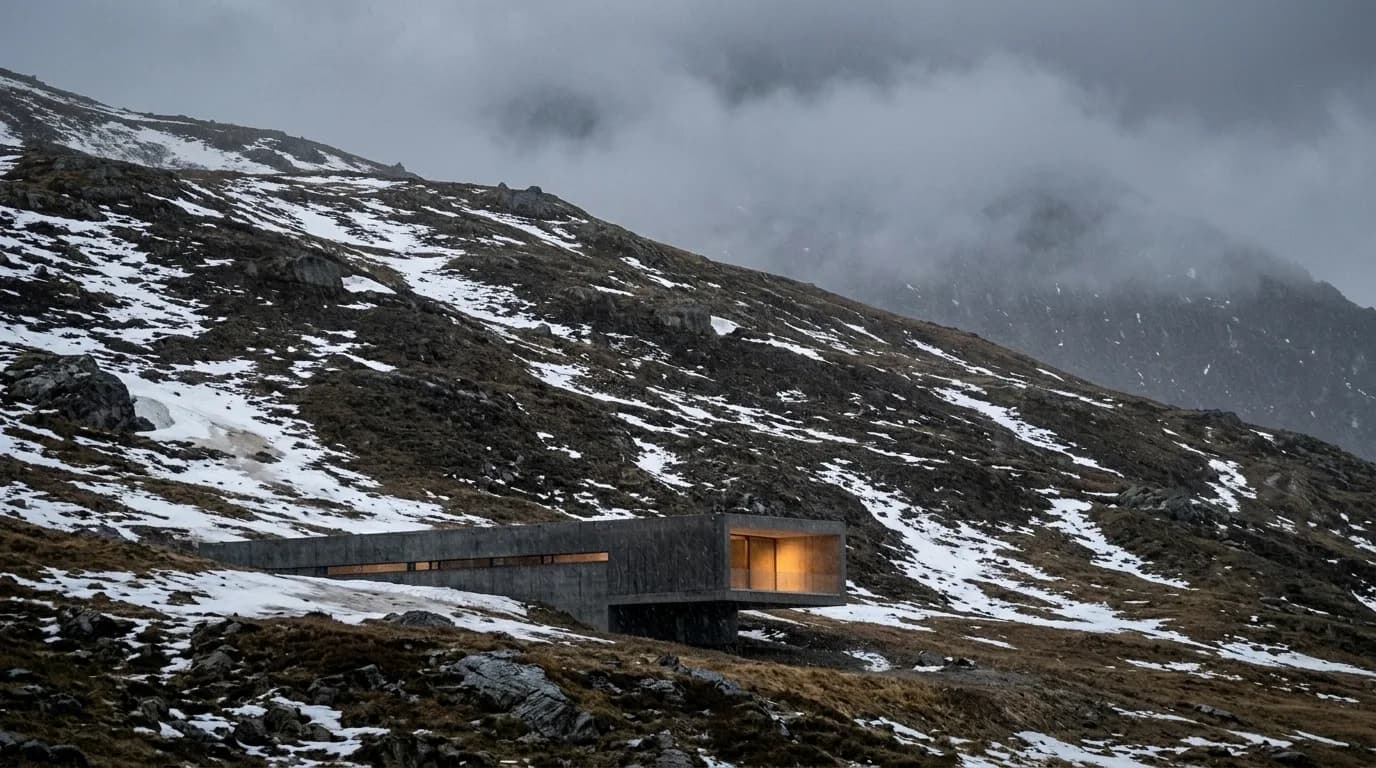
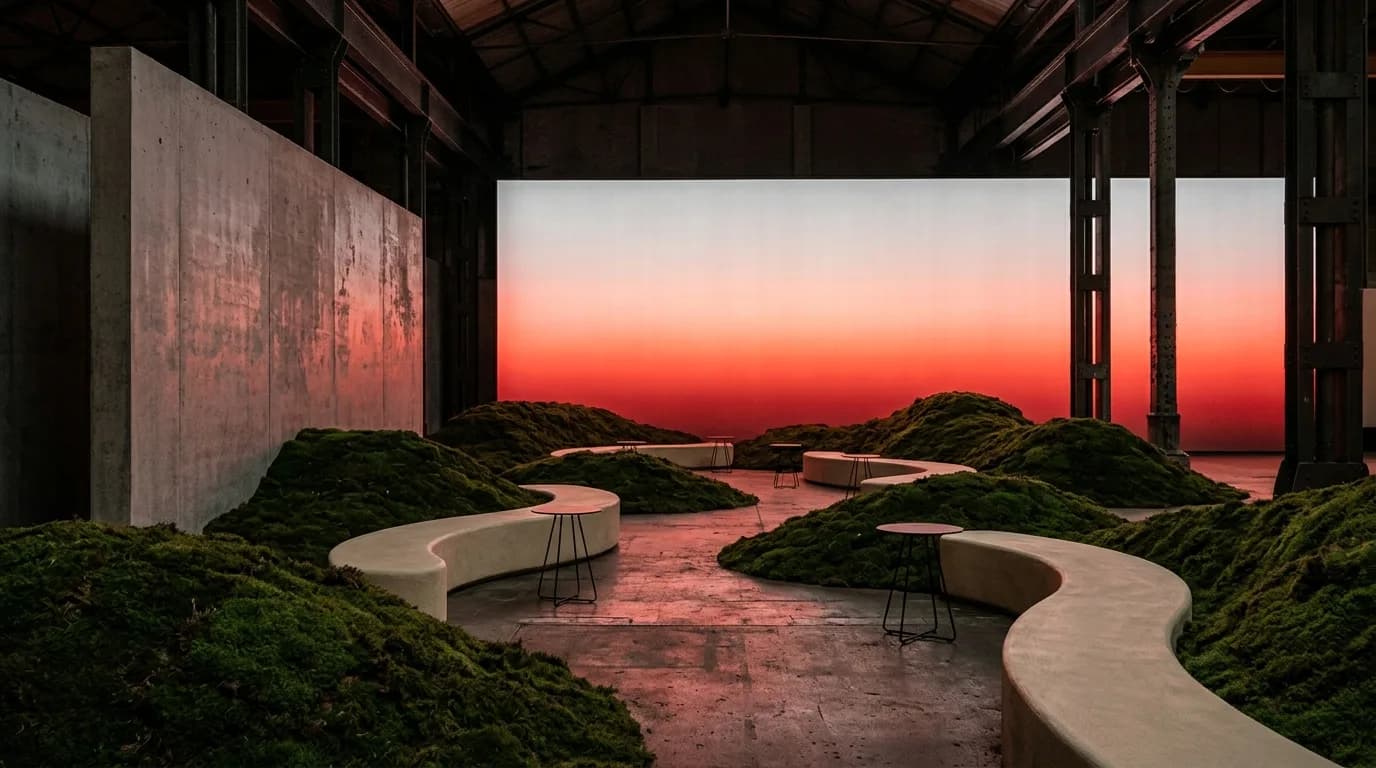
Light, color, weather and atmosphere shape how a design comes across. Click an example to see the same scene in its variants.
01
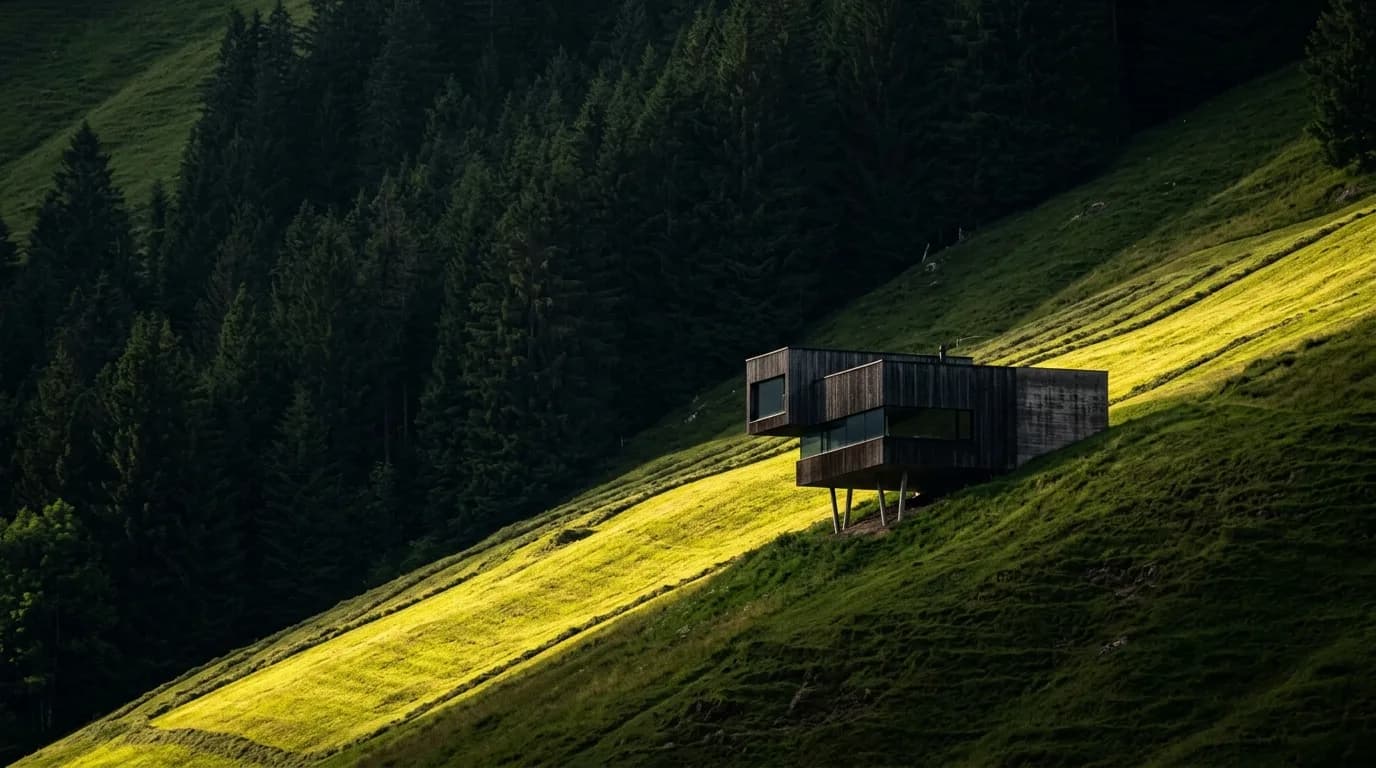
A narrow strip of evening sun on the slope, the rest in shadow: the light guides the eye to the house. In early winter and as a white model, you see what carries the mood and what carries the form.
02
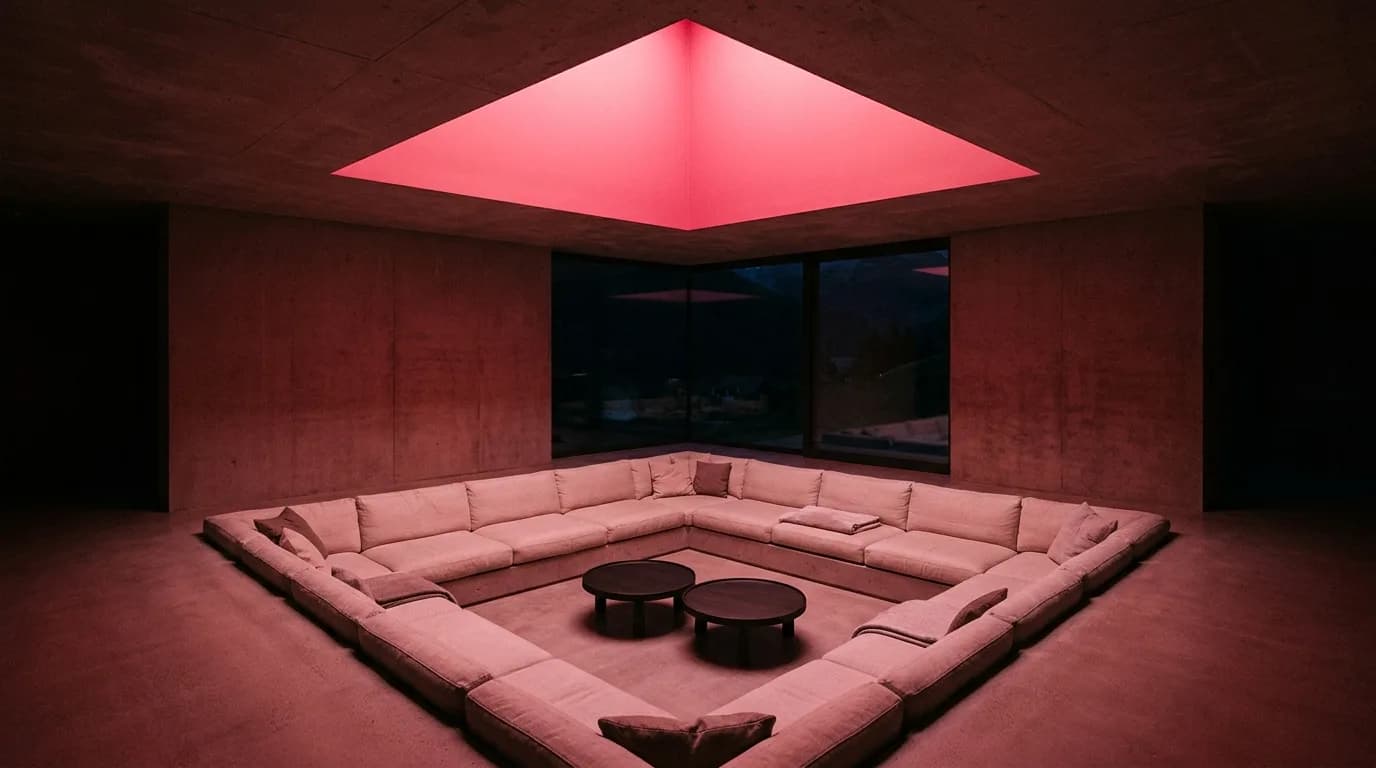
Red light from the skylight tints the whole room. In cool winter light, with lime plaster and linen or as a white model, the same seating area reads differently each time.
03
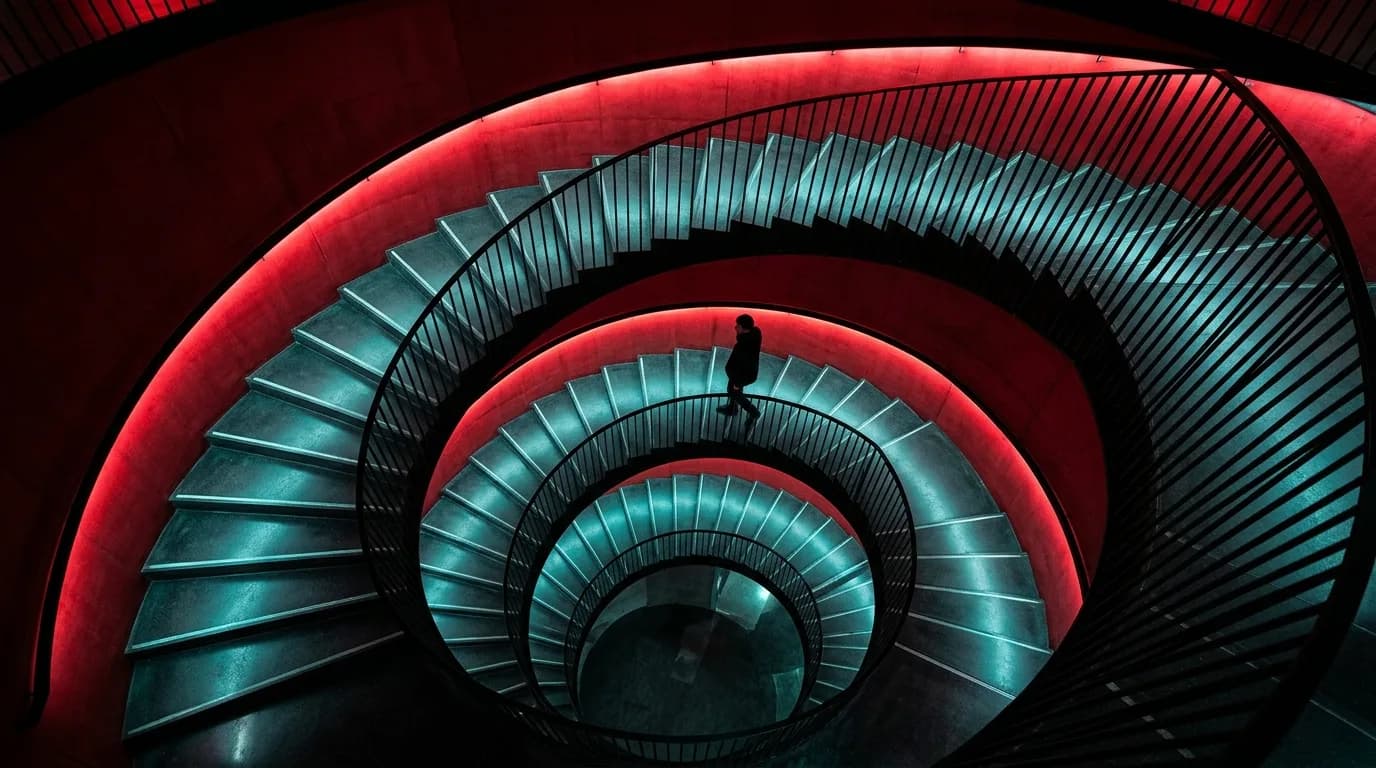
Red and turquoise turn the stairwell into a recognizable image. In daylight or in violet and amber, you test how strongly the light color should define the space.
04
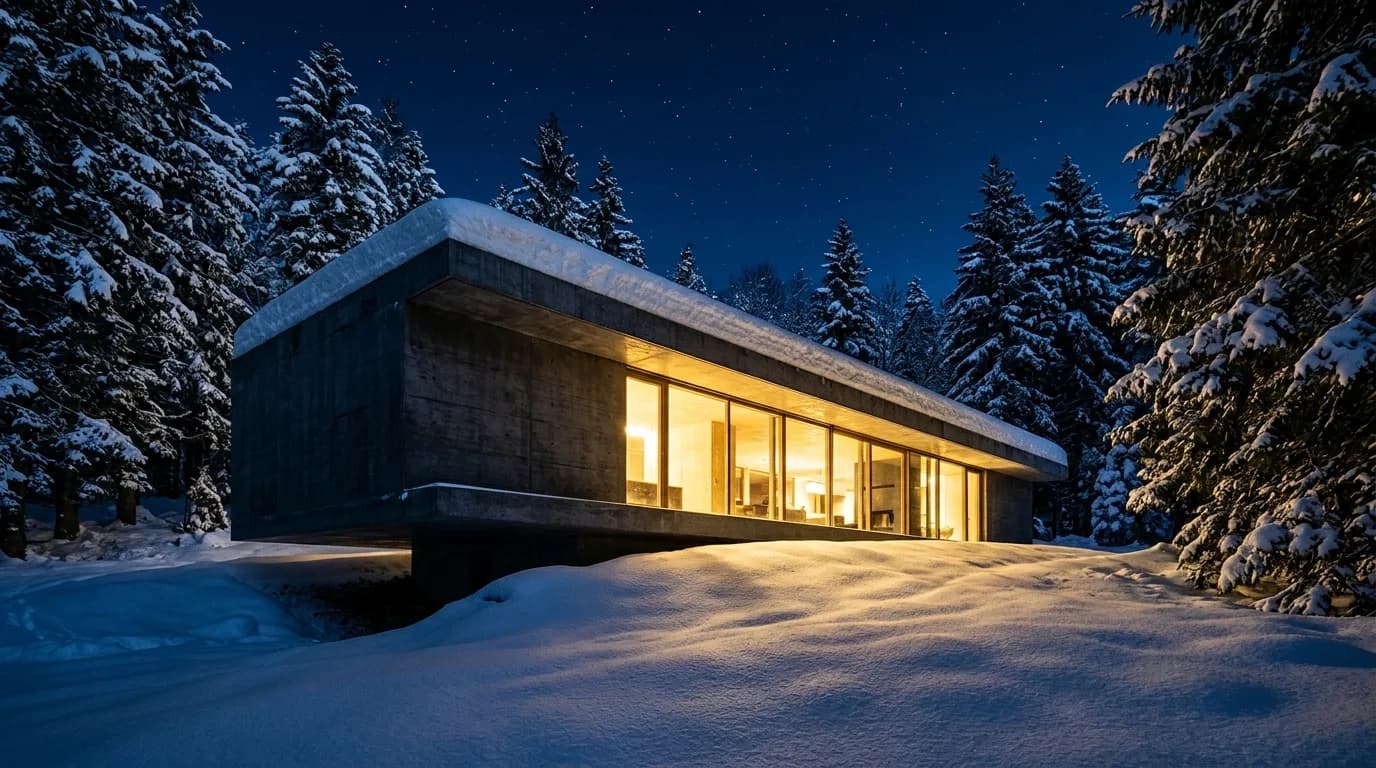
At night the glass front becomes the light source and the forest recedes. With light larch instead of a dark facade and as a white model, you see how envelope and light work together.
05
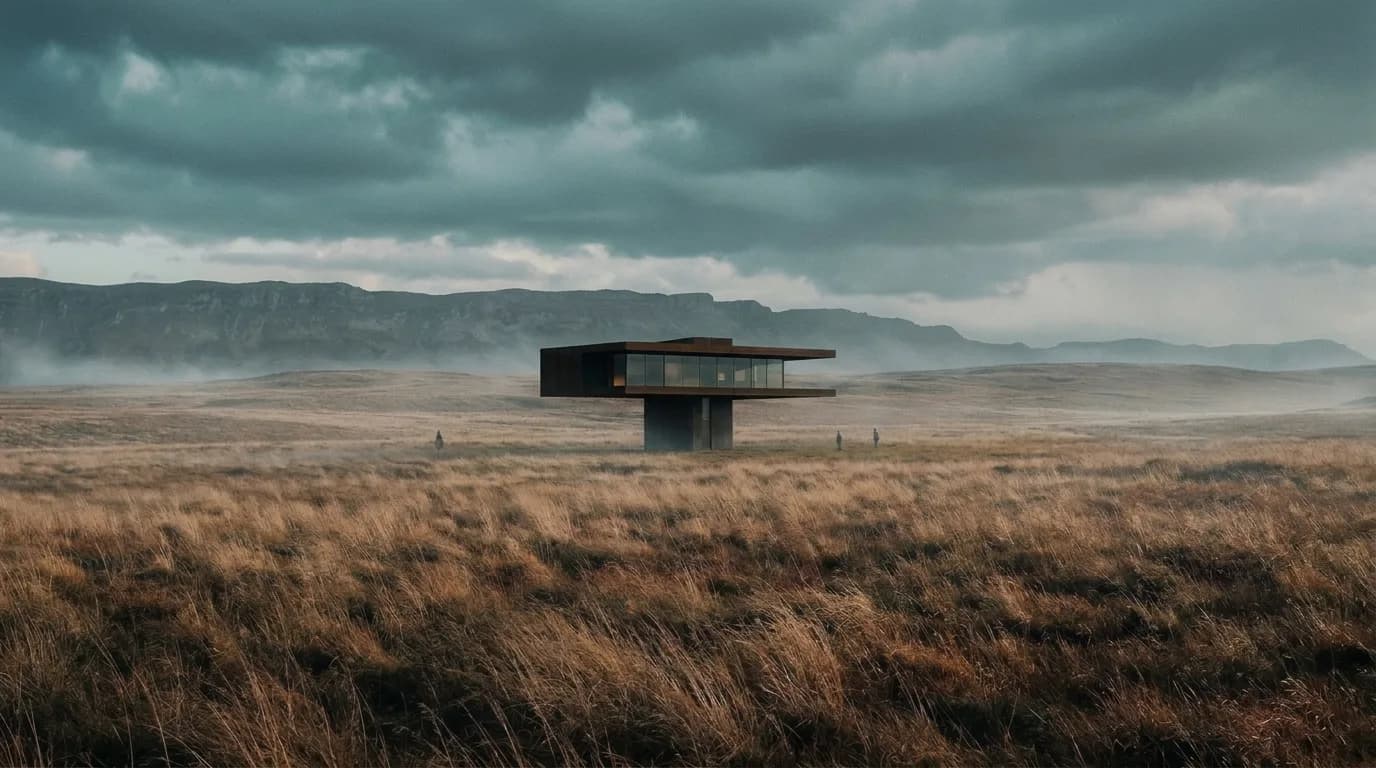
Fine fog, muted colors and clear architecture in the foreground: the restrained atmosphere of many competition images. Alongside, the same villa in sleet and as a white model.
06
A light wall in sunset glow or blue-violet tints the moss, floor and benches along with it. That way you tune installations and interiors to a color before anything is built.
Each scene in its variants: weather and season, fog, other colors and materials, white model. Click an image to see the variants.
How image style accompanies a project – from the concept study to the submission.
Concept
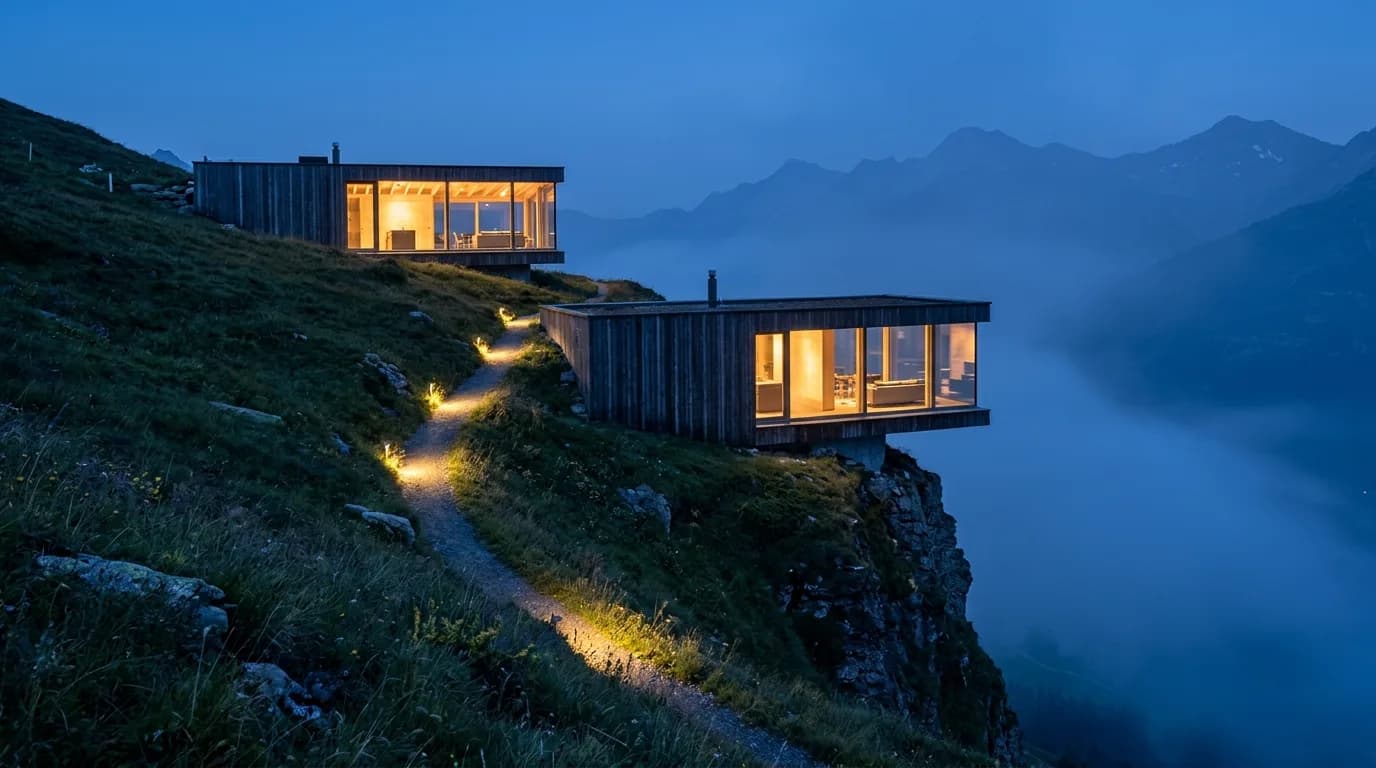
Before the details are fixed, you settle the stance: blue hour or midday light, fog or clear view. The image shows the direction; you lead the design.
Variants
The same scene at night, in winter or in other materials: you place the variants side by side and choose which presentation carries the project.
Competition
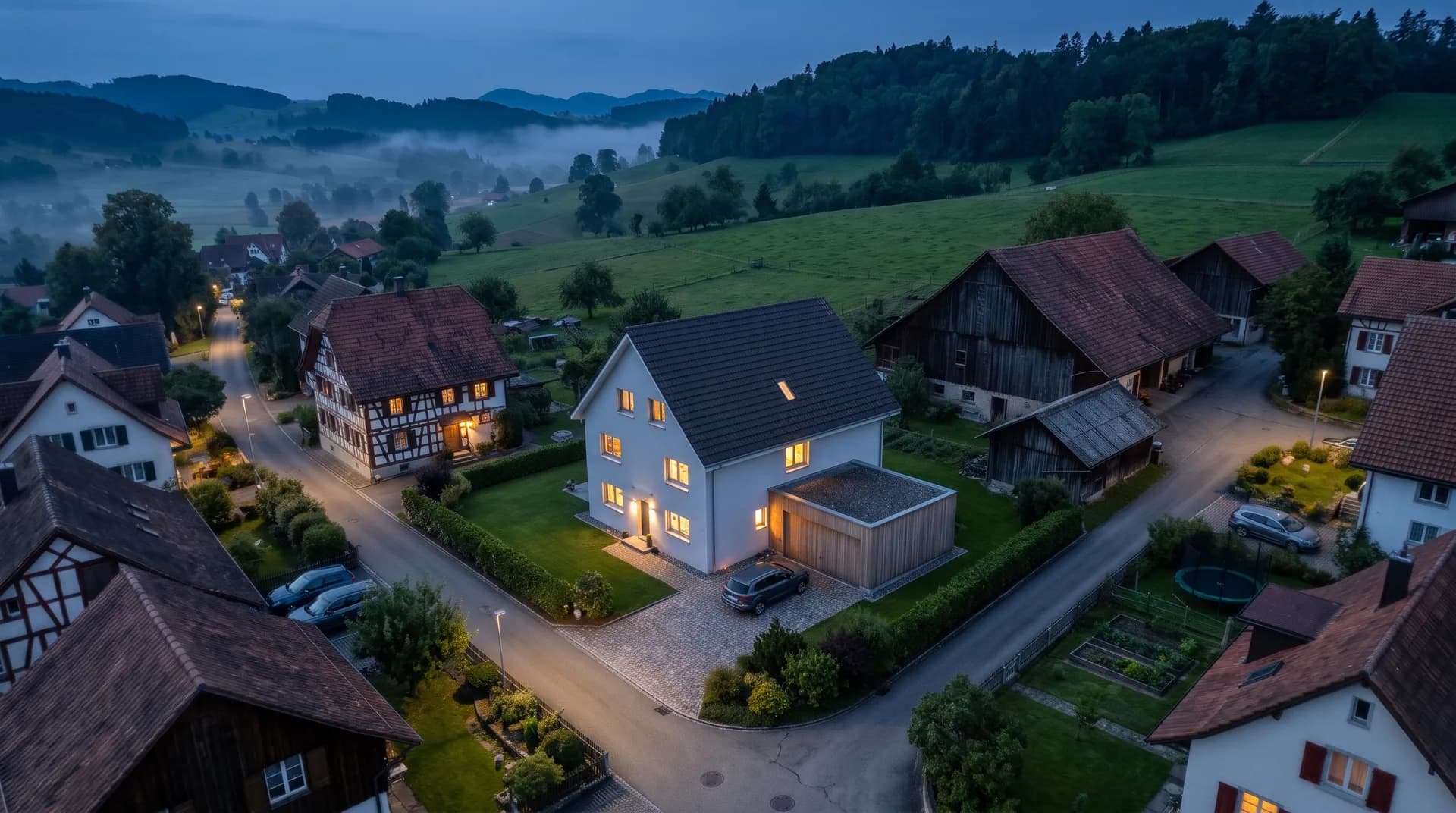
Many competition images rely on a restrained atmosphere: fine fog, muted colors, the architecture clearly in the foreground. You decide what effect your entry needs.
Presentation
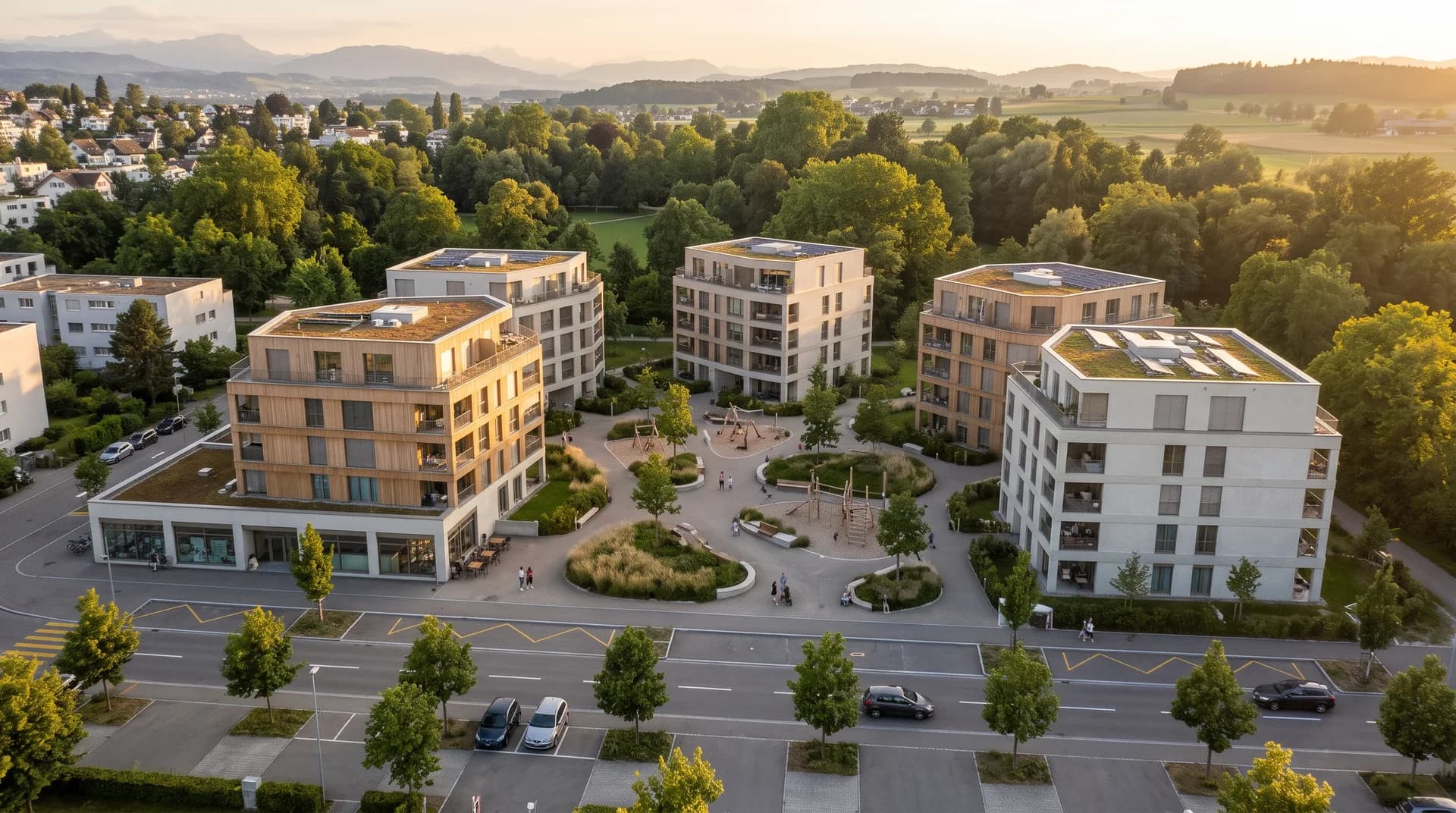
Keep light, color and atmosphere consistent across all images of a project, from exterior view to interior. That way the presentation feels all of a piece.
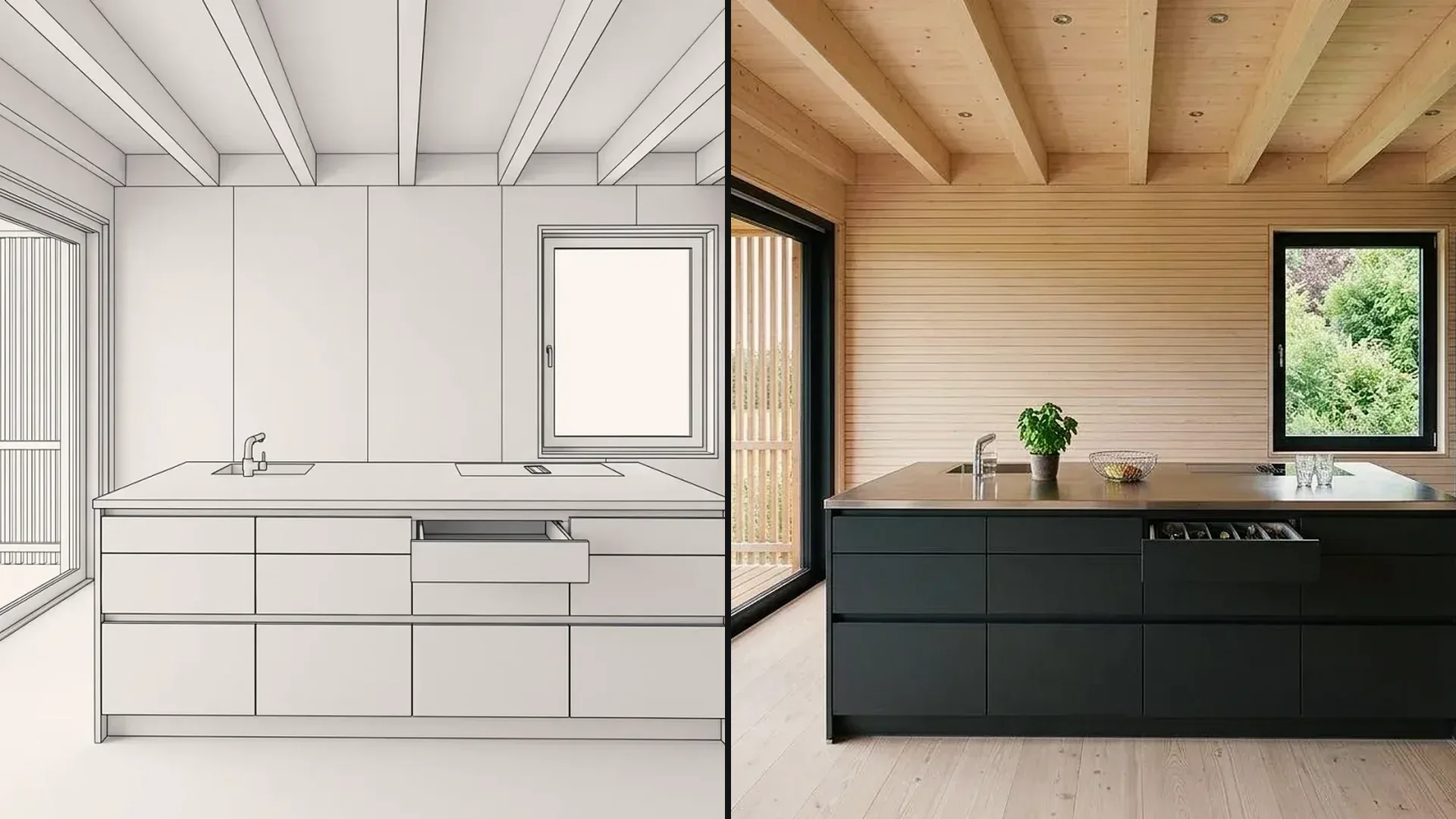
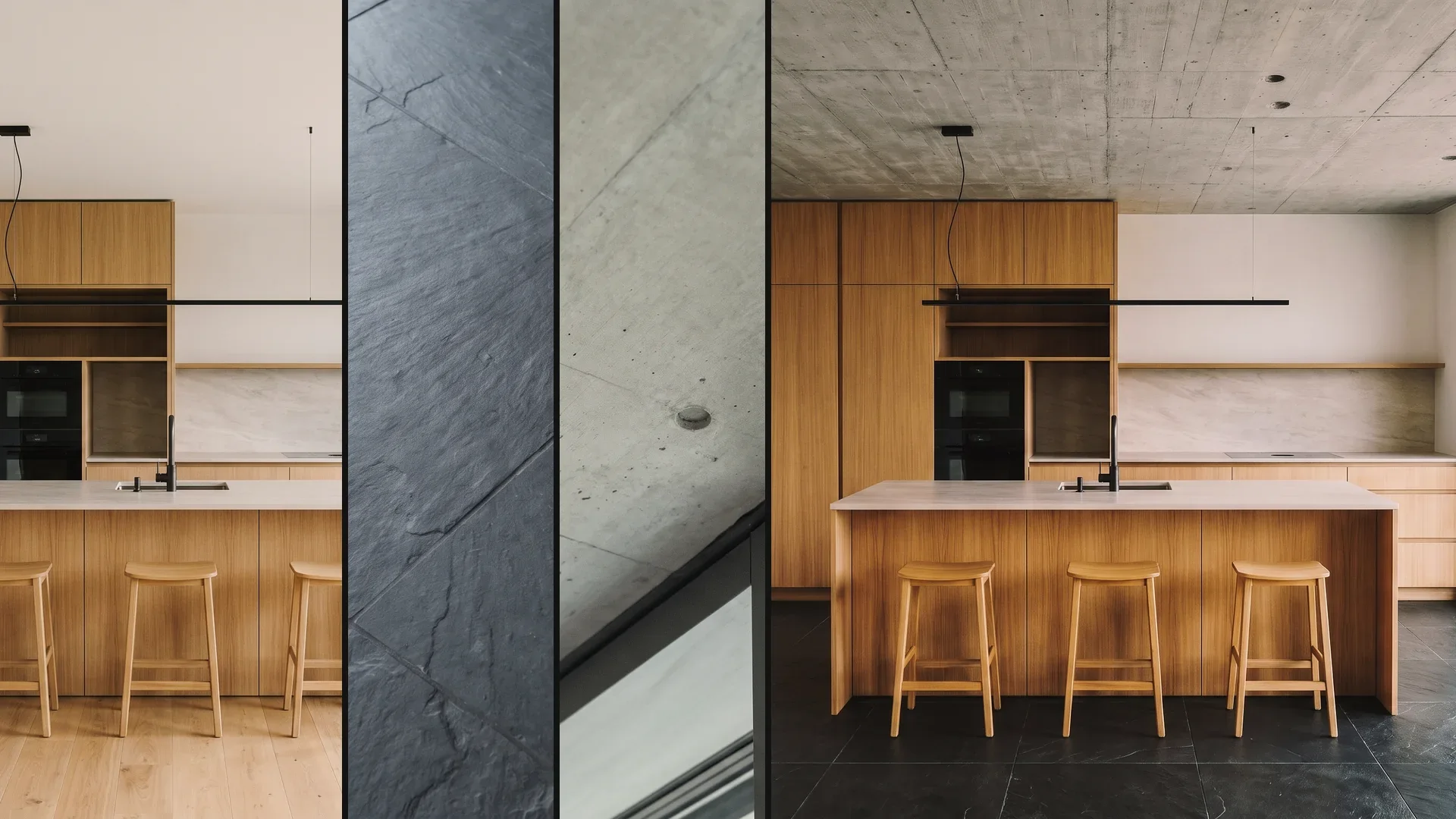
Mark an area, show material or style with a reference image, and collect the variants in Boards. Here's how it looks in the app.
01
Mark the area that should change – such as the sky, a light source or the facade. The marked area is recalculated; outside the mask the image may lose a little sharpness.
02
Show material or style with a reference image. The result interprets the sample.
03
Place the moods of a project side by side in Boards – from the first study to the chosen presentation. That way you make the choice with your team or your clients.
How design firms, students and marketing teams settle mood and presentation with Vizera.
Show competition images and presentations in a visual language that suits the design.
Study light, color and atmosphere on your own work, for crits and submissions.
Show room moods with light and color before materials and lights are ordered.
Show properties in the right mood – at blue hour, in winter or at night.
Try the workflow with a project of your own first. Free is for non-commercial testing. For client projects, choose a paid plan.
Annual payment: 12-month term.
For Testing
Free of charge
200 Credits
up to 40 images, depending on model and resolution
Costs less than one external visualization
EUR 1'548/ year
equivalent to EUR 129 / mo
With monthly billing: EUR 161/ mo
Save EUR 384 per year
4'000 Credits
160–800 images or 10–13 videos, depending on model and resolution
excl. VAT · Annual payment: 12-month term
Native 4K and enough credits to never count
EUR 3'408/ year
equivalent to EUR 284 / mo
With monthly billing: EUR 355/ mo
Save EUR 852 per year
10'000 Credits
400–2'000 images or 25–33 videos, depending on model and resolution
excl. VAT · Annual payment: 12-month term
Depending on model and resolution. Subscription credits reset monthly and are used first; purchased credit packs are valid until the end of the third calendar year after purchase.
A convincing image also has to hold up in everyday design work. In Vizera Labs, we test AI models and editing methods on architecture and interior images – with documented comparisons, measurable criteria and human evaluation.
Do building, camera and proportions stay the same when only light and mood are meant to change? We compare style variants with the source image and check which details are preserved or changed.
A new sky should not quietly change windows and roof. We measure what happens inside and outside the marked area during local edits.
How close does the result come to your material sample? We compare reference image and visualization and assess how color, surface and material character carry over.
First the facade, then the light, then the furnishings: we examine how image structure, sharpness and colors change across several editing steps.
More pixels don't automatically mean better detail. We compare upscaled images in close-up and check for convincing structures, smoothing and unwanted textures.
Which model suits which task? We compare models on shared test tasks and evaluate image quality, processing time and cost as the basis for our product choices.
Internal Vizera tests. Results apply to the documented tasks, models and settings. You'll find the test scope and limitations with each study.
Image style supports the presentation. Your plans remain authoritative for design, construction and submission.
When light or weather changes, windows, edges and small details may change, even when the scene is meant to stay the same. Correct such spots with Masking or start a new generation.
The image shows a mood, not a simulation. For daylight, lighting and color rendering, specialist planning and samples remain authoritative.
Whether and how AI-assisted visualizations are allowed in a competition is set by the brief. Check the requirements before you submit images.
How the individual tools work and what firms and businesses use them for.
Short videos on this topic: follow along step by step in your account.

Answers on descriptions, reference images, scene fidelity, image series and competitions.
You describe the mood in plain language – for example "blue hour, fine fog, muted colors". Vizera applies the description to your uploaded image; you choose which results go into the project.
200 Credits free, once on sign-up. No credit card, no installation.
